A brand identity needs to do more than just exist; it needs to connect. While minimalist geometric logos are common, they often lack a human touch. A custom mascot logo gives your brand an immediate personality, turning an abstract business entity into a relatable character.
To help your audience and search engines understand why this asset matters, here is a breakdown of the value of collaborating with specialized artists.
Why Choose a Custom Mascot Over a Standard Text Logo?
Choosing a mascot over a traditional wordmark or abstract symbol changes how people perceive your business. Working with top-tier mascot logo designers ensures your final asset is a choice between being recognized or being remembered.
Feature | Custom Mascot Logo | Standard Geometric/Text Logo |
Emotional Connection | High. Evokes specific feelings, humor, or nostalgia. | Low to Moderate. Focuses on corporate neutrality. |
Storytelling Ability | Excellent. The character directly acts out your brand narrative. | Limited. Relies entirely on color theory and abstract shapes. |
Adaptability | High. Can be animated, posed, and used for merchandise. | Static. Harder to naturally animate without losing form. |
Market Niches | Sports, gaming, food, tech startups, and youth brands. | Finance, legal, luxury goods, and corporate consulting. |
What are the main benefits of using a custom mascot logo?
Mascots bridge the gap between transactional commerce and authentic human interaction. Implementing a custom character drives value across several core areas of your operations:
- Instant Brand Recognition: Human brains are hardwired to recognize and remember faces far better than abstract shapes or text strings. A well-designed mascot makes your brand identifiable at a single glance.
- Built-in Storytelling: A character tells a story without words. Whether it is a tech-savvy owl representing an ed-tech app or a rugged bear representing outdoor gear, the visual archetype immediately communicates what you stand for.
- Enhanced Social Engagement: Mascots perform exceptionally well on visual platforms. They can react to trends, celebrate holidays, and speak directly to followers in a way a corporate logo never could.
- Alternative Revenue Streams: A successful mascot often transitions into physical products. Plush toys, apparel, stickers, and digital assets can open entirely new monetization channels for your business.
Why should you hire a professional designer instead of using stock vectors?
It is tempting to download a cheap pre-made vector illustration from a stock website, but pre-made graphics carry significant hidden costs. Partnering with a specialized mascot logo design agency ensures your visual asset is legally secure and tailored to your long-term goals.
- Trademark Security: Stock images cannot be trademarked. If you use a stock asset for your brand icon, a competitor can legally use the exact same graphic, destroying your market uniqueness.
- Anatomical and Technical Precision: Professional illustrators understand scaling, line weights, and vector file construction. A custom asset will look crisp on a tiny smartphone app icon and a massive billboard alike.
- Expressive Versatility: A custom designer creates a character with clear underlying geometry. This means if you need the character in a new pose later (e.g., holding a holiday sale sign), the artist can replicate the character accurately.
How do you select the right custom mascot designer?
Finding the right creative partner requires looking beyond a generic design portfolio. You need to connect with the leading logo designers for premium branding work who assess specific technical and stylistic capabilities:
- Review Style Diversity: Look at their past work. Do all their characters look the same, or can they shift from aggressive sports branding to friendly, soft corporate illustrations? Match their strengths to your target demographic.
- Verify Vector Deliverables: Ensure their workflow is entirely vector-based (using software like Adobe Illustrator). Raster graphics (like Photoshop files) will pixelate when scaled up for signage or print.
- Check for Character Sheets: Ask if they provide turnaround sheets (views of the character from the front, side, and back). This is essential if you plan to create 3D models, animations, or merchandise later.
What should you expect during the design process?
A structured collaborative process yields the best results. A typical professional workflow consists of four distinct phases:
Phase 1: Discovery and Conceptualization
You provide the designer with your brand values, target audience, and industry niche. Together, you decide on the archetype (e.g., friendly animal, heroic human, or animated object).
Phase 2: Rough Sketching
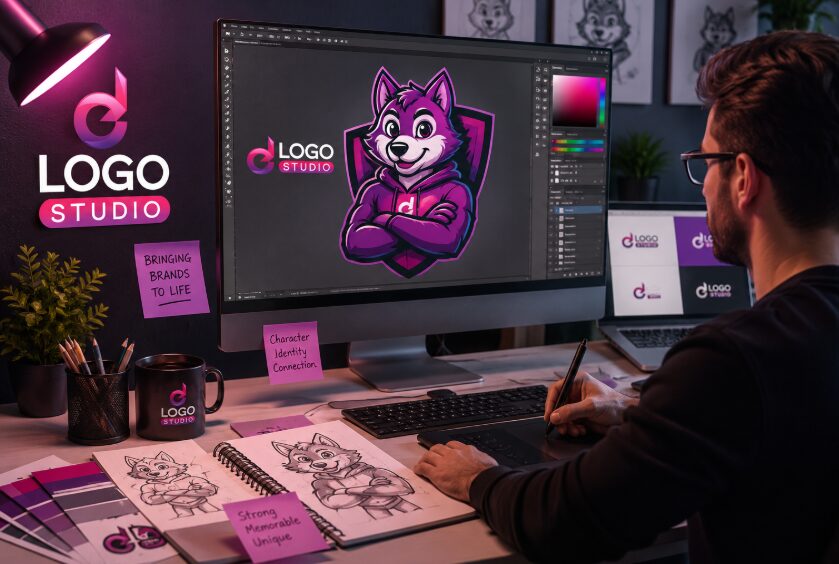
The artist creates loose, black-and-white concept sketches exploring different poses, proportions, and expressions. This is the stage where you lock down the overall shape and attitude of the character.
Phase 3: Vector Line Work and Inking
Once a sketch is approved, the designer clean-traces the character into a crisp digital vector format, finalizing the linework before adding color.
Phase 4: Color Application and Final Delivery
The designer applies your brand color palette, adds shading or highlights for depth, and delivers the finalized master files in multiple formats (.AI, .EPS, .PNG).