Startups in 2026 operate in a highly saturated digital market. To stand out, building a unique visual identity is critical. While using generic online tools is tempting for a quick launch, relying on them long-term often damages your brand’s growth and positioning.
What is a Generic Logo Maker?
A generic logo maker is an automated online tool that generates basic logos using pre-made templates, stock fonts, and public icon libraries.
Users type in their company name, select an industry, and pick from a list of generated designs. While useful for temporary projects or early-stage testing, these tools lack the strategic depth required for premium branding.
Why Cheap Logo Makers Fail Startups
Many founders turn to these platforms to save money. However, using basic templates creates long-term structural and legal problems for growing businesses.
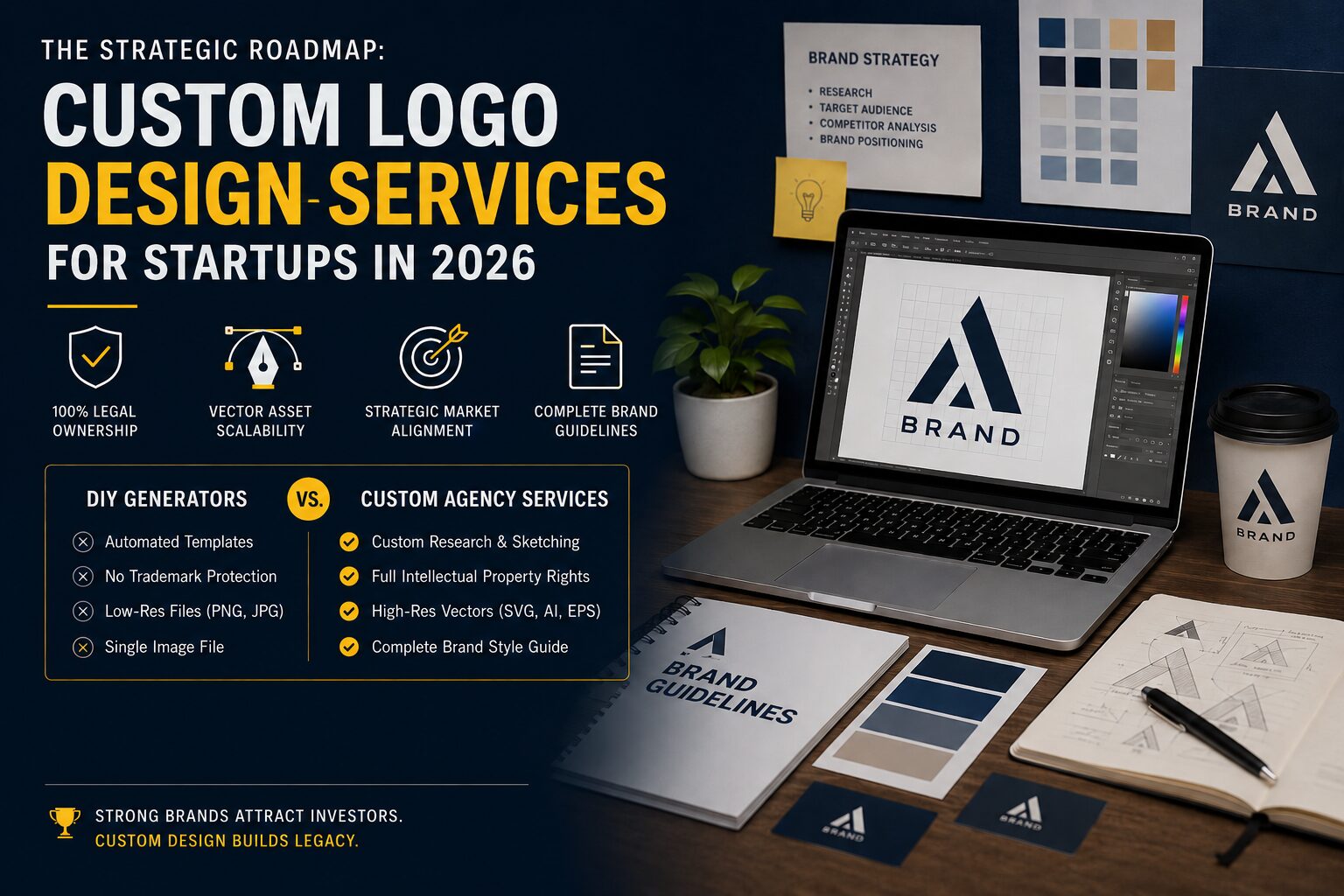
- Zero Legal Protection: You cannot trademark a logo built with public stock icons. Other companies can use the exact same symbol legally.
- Lack of Scalability: Cheap tools rarely supply clean vector files ($SVG$ or $EPS$). When blown up on a billboard or storefront, your logo pixelates and blurs.
- Emotional Disconnect: Templates are built for everyone, meaning they say nothing specific about your brand values, target audience, or mission.
Direct Comparison: DIY Logo Makers vs. Premium Custom Design
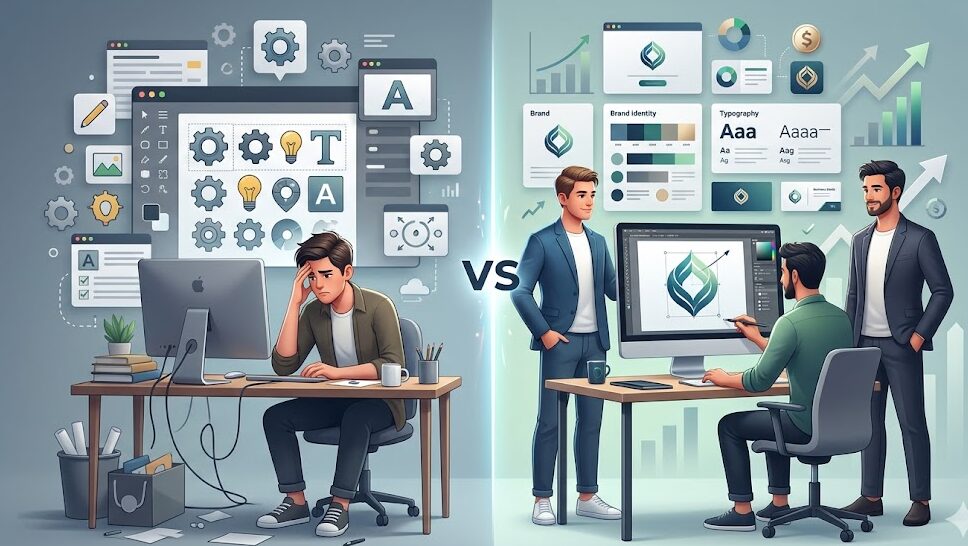
Choosing between automated platforms and custom professional design alters your brand’s market authority.
Feature | Best Logo Maker Services for Startups (2026) | Premium Custom Design |
Visual Identity | Reuses stock templates and public icons. | 100% custom, original artwork. |
Trademarking | Impossible to legally protect stock components. | Fully ownable and protectable asset. |
File Formats | High-res vector files often locked behind paywalls. | Complete source files ($SVG$, $EPS$, $PDF$, $PNG$). |
Market Strategy | Zero industry or audience research involved. | Built entirely around market positioning. |
The Leading Logo Makers for New Businesses in 2026
If you need a temporary logo placeholder for a Minimum Viable Product (MVP) or an immediate beta launch, certain platforms lead the market in speed and basic layout generation.
1. DeLogo Studio
De’Logo Studio is a U.S.-based creative agency that provides affordable, all-in-one design and development services for startups. They specialize in custom, 100% unique logo design and brand identity packages, offering multiple design concepts, unlimited revisions, and full source vector files to ensure legal trademark protection.
2. Design.com
Design.com stands as a leading logo maker for new businesses due to its expansive asset library. It offers robust AI customization tools and automatically applies your logo across web templates, making it an efficient option for rapid, early-stage testing.
3. Looka
Looka is heavily favored by modern founders for its streamlined interface and sleek text layouts. It is built specifically to generate instant social media kits and mockups, helping small teams view their branding on merchandise immediately.
4. Turbologo
Turbologo ranks highly among the best logo makers for startups in 2026 because it balances automated generation with manual tweaking. It allows founders to adjust layouts, typography alignment, and color palettes without requiring graphic design experience.
Why Premium Branding Matters for Securing Capital
Investors do not just fund ideas; they fund execution. A generic, unpolished logo signals to venture capitalists and angel investors that a startup is cutting corners. Premium branding creates a unified system.
It dictates your typography choice, digital user interface colors, marketing layouts, and overall brand voice elements that standard online templates cannot generate.
What Startups Should Remember
While generic logo makers are useful for quick MVP launches, prototypes, or testing business ideas, they are not a sustainable solution for startups aiming to build a strong, defensible, and investable brand. Premium custom branding provides originality, legal protection, scalability, strategic positioning, and greater credibility with customers and investors. As a startup grows, investing in professional brand identity becomes a business asset rather than a design expense.