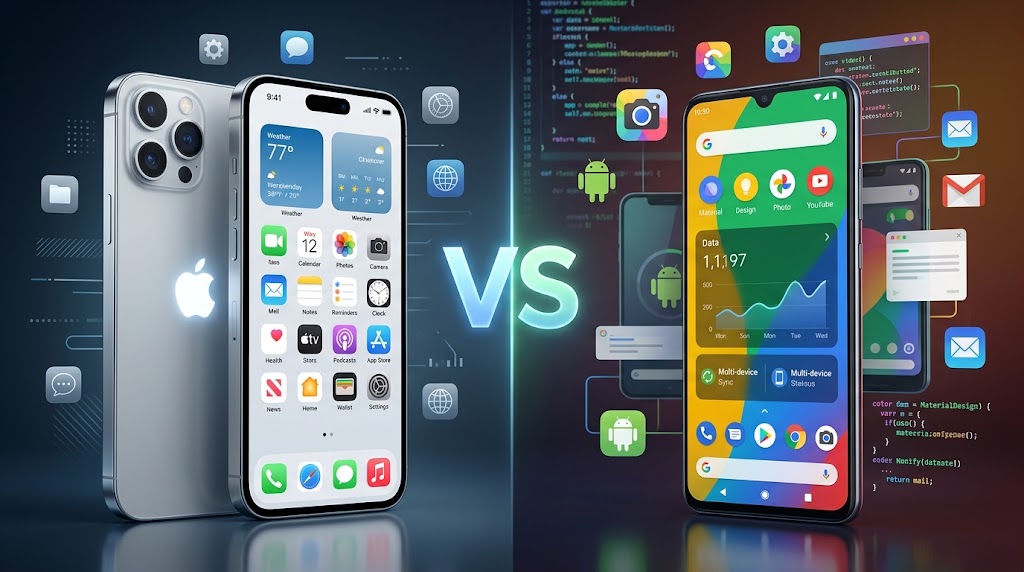

- Mobile Application Development: Why More Texas Businesses Are Investing in Mobile Apps
- What Is Mobile Application Development?
- Why Is Mobile App Development Important for Texas Businesses?
- Types of Mobile Applications
- Native vs. Hybrid vs. Cross-Platform: Which Option Makes the Most Sense?
- Mobile App Development Process
- Key Features Every Business Mobile App Should Have
- Benefits of Mobile Application Development
- How Much Does Mobile App Development Cost in Texas?
- Common Challenges in Mobile Application Development
- Mobile App Development Trends in 2026
- Why Choose Delogo Studio for Mobile Application Development?
Mobile Application Development: Why More Texas Businesses Are Investing in Mobile Apps
Take a look around. Almost everyone has a smartphone within reach, and it’s become the first place people go when they need to buy something, book a service, or contact a business.
That’s exactly why mobile application development has become such an important investment for companies across Texas.
A well-designed mobile app does more than give customers another way to reach you. It creates a faster experience, strengthens customer relationships, and makes everyday business operations much easier to manage.
Whether you run a startup in Austin, a healthcare practice in Houston, a retail store in Dallas, or a service business in San Antonio, a custom mobile app can help you stay connected with customers and stand out in a competitive market.
In this guide, you’ll discover what mobile application development is, how the process works, the different types of mobile apps available, and how choosing the right solution can support long-term business growth.
What Is Mobile Application Development?
Mobile application development is the process of creating software applications that run on smartphones and tablets. These apps are built for Android, iOS, or both platforms, giving users quick access to products, services, and information wherever they are.
Unlike traditional websites, mobile apps are designed specifically for mobile devices. They load faster, offer smoother navigation, and provide features that improve the overall user experience.
For example, businesses can include:
- Push notifications
- Secure online payments
- GPS and location tracking
- Appointment scheduling
- Customer accounts
- Loyalty rewards
- Live chat support
These features make it easier for customers to interact with your business while giving your team better tools to manage daily operations.
Today, companies in nearly every industry rely on mobile apps to improve communication, increase efficiency, and provide better customer service.
Why Is Mobile App Development Important for Texas Businesses?
Texas continues to attract new businesses, startups, and entrepreneurs every year. At the same time, customer expectations continue to grow.
People want quick answers, simple checkout processes, and instant access to services. If your business can’t provide that convenience, they’ll often choose a competitor that can.
A custom mobile application helps solve that problem.
It gives customers a direct connection to your business while helping you build stronger relationships over time.
Some of the biggest advantages include:
- Better customer engagement
- More online sales
- Stronger brand recognition
- Faster customer support
- Easier appointment scheduling
- Personalized promotions
- Valuable customer insights
- Streamlined business operations
Whether you work in healthcare, real estate, retail, education, logistics, hospitality, or professional services, a mobile app helps create a smoother experience from the first interaction to the final purchase.
Instead of depending only on your website or social media pages, your business stays one tap away on your customer’s phone.
What Does Mobile Application Development Include?
Many people think building an app is simply writing code.
In reality, development starts long before the first line of code is written.
Every successful project begins with understanding the business, the target audience, and the problem the app is meant to solve.
A complete mobile application development project usually includes:
- Business consultation
- Market and competitor research
- Project planning
- Feature planning
- UI/UX design
- Front-end development
- Back-end development
- API integration
- Security implementation
- Performance testing
- App Store and Google Play publishing
- Ongoing maintenance and updates
Each stage plays an important role in delivering an application that’s secure, scalable, and easy to use.
Skipping any of these steps can lead to poor performance, frustrated users, and higher development costs later.
Types of Mobile Applications
Not every business needs the same type of mobile app.
The right choice depends on your budget, timeline, business goals, and the features you want to offer.
Native Applications
Native apps are developed specifically for Android or iOS.
Because they’re built for a single platform, they deliver excellent speed, smooth performance, and full access to device features like cameras, GPS, fingerprint authentication, and notifications.
They’re often the best choice for businesses that need advanced functionality or enterprise-level performance.
Hybrid Applications
Hybrid apps combine web technologies with native app capabilities.
Since developers only maintain one codebase, they usually cost less and take less time to build than native apps.
For many startups and small businesses, hybrid development offers a practical balance between performance and budget.
Cross-Platform Applications
Cross-platform development has become one of the most popular options for modern businesses.
Frameworks like Flutter and React Native allow developers to build one application that works on both Android and iOS.
That means faster development, lower maintenance costs, and a consistent experience across devices.
For many Texas businesses, it’s one of the most cost-effective solutions available.
Progressive Web Apps (PWAs)
Progressive Web Apps, often called PWAs, combine the flexibility of a website with many features found in mobile apps.
Users don’t need to download anything from an app store. Instead, they access the application directly through their browser.
PWAs work well for businesses that want a mobile-friendly experience without investing in a full native application.
Native vs. Hybrid vs. Cross-Platform: Which Option Makes the Most Sense?
Every business has different goals, so there’s no universal answer.
Here’s a quick comparison.
| Feature | Native | Hybrid | Cross-Platform |
| Performance | Excellent | Good | Excellent |
| Development Cost | High | Lower | Moderate |
| Time to Launch | Longer | Faster | Fast |
| User Experience | Outstanding | Good | Excellent |
| Maintenance | Higher | Easier | Easier |
For most startups and growing businesses in Texas, cross-platform development offers the best combination of affordability, flexibility, and long-term value.
It allows companies to reach Android and iPhone users without maintaining two completely separate applications.
Mobile App Development Process
Building a successful mobile application isn’t about rushing into development.
The strongest apps follow a structured process that keeps the project organized from start to finish.
A typical mobile application development process includes:
- Business consultation and goal planning
- Market research and competitor analysis
- UI/UX design and wireframing
- App development and coding
- Quality assurance and performance testing
- Publishing on the Apple App Store and Google Play Store
- Ongoing maintenance, updates, and feature improvements
Each phase helps reduce costly mistakes while ensuring the final product is secure, scalable, and ready to grow alongside your business.
Key Features Every Business Mobile App Should Have
A great mobile app isn’t just about how it looks. It’s about how well it works for your customers and your business.
People expect apps to be simple, fast, and reliable. If an app feels slow or confusing, they’ll probably stop using it after the first visit.
That’s why every business app should include features that improve both usability and customer experience.
Some of the most valuable features include:
- Easy navigation that helps users find what they need quickly.
- Fast loading speeds for a smooth experience.
- Secure login and data protection to build customer trust.
- Push notifications for promotions, reminders, and important updates.
- Online payment integration for secure and convenient transactions.
- Live chat or customer support for faster communication.
- GPS and location services for delivery, directions, or nearby locations.
- Appointment booking or order management for service-based businesses.
- Personalized user profiles that create a more tailored experience.
- Analytics and reporting to understand customer behavior and improve future decisions.
The right combination of features depends on your business goals, but the objective is always the same make life easier for your customers.
Benefits of Mobile Application Development
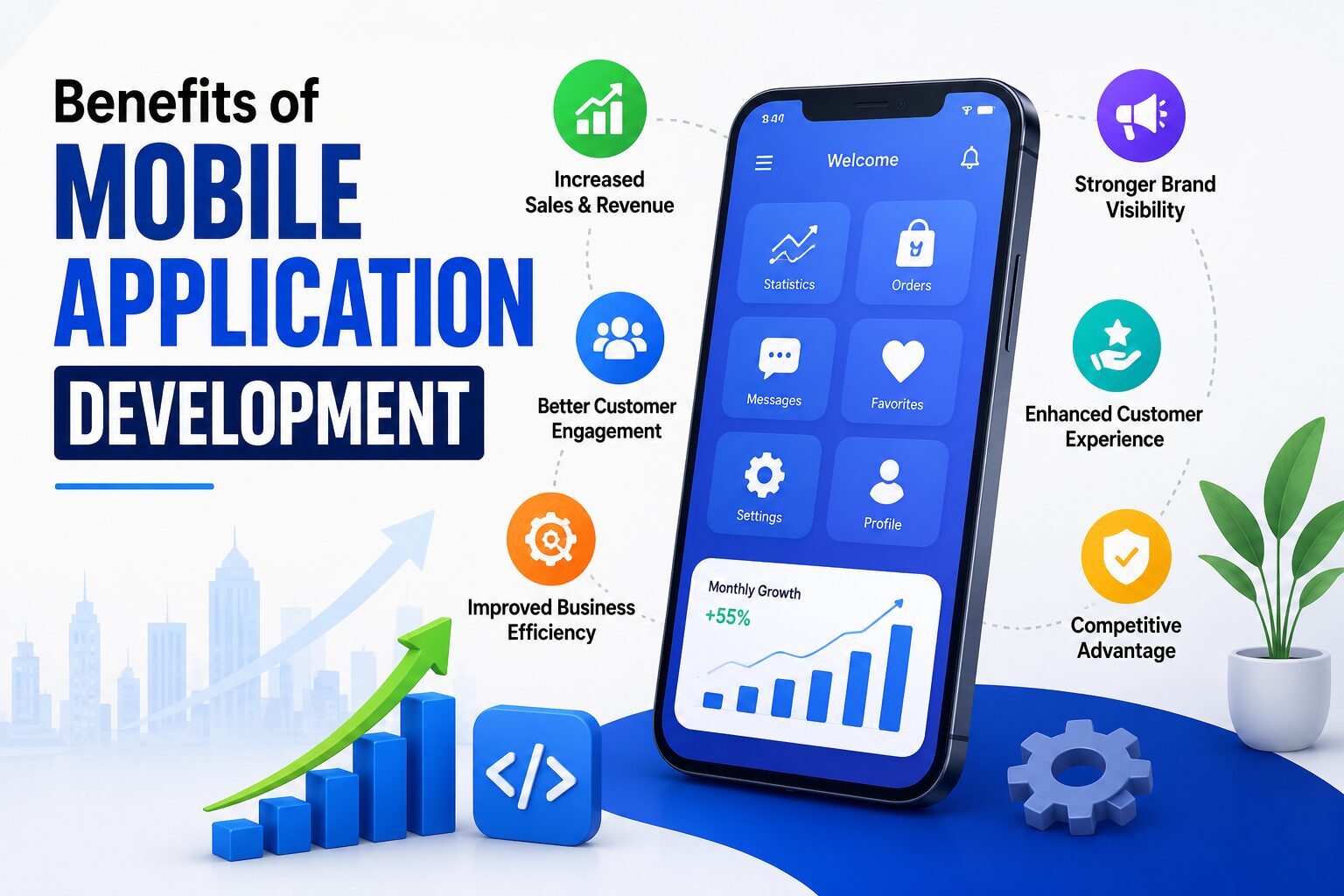
A mobile app isn’t simply another digital product. It’s a long-term investment that can support business growth in several ways.
Stronger Customer Relationships
A mobile app gives customers a direct connection to your business.
Instead of waiting for them to visit your website, you can send updates, exclusive offers, appointment reminders, or product announcements straight to their phones.
Regular interaction helps build trust and encourages repeat business.
Better Brand Visibility
Your app icon stays on your customer’s device every day.
That constant visibility keeps your brand top of mind whenever they need your products or services.
Increased Sales
The easier you make it for customers to buy, the more likely they are to complete a purchase.
A well-designed app simplifies browsing, ordering, booking, and payments, helping reduce friction throughout the buying journey.
Improved Customer Experience
Customers appreciate convenience.
Features like saved preferences, faster navigation, one-click payments, and personalized recommendations make the entire experience more enjoyable.
Happy customers are also more likely to leave positive reviews and recommend your business to others.
Improved Business Efficiency
Many routine tasks can be automated through a mobile app.
Scheduling appointments, tracking orders, sending notifications, and managing customer requests become faster and more efficient, allowing your team to focus on higher-value work.
Competitive Advantage
Many businesses still rely only on websites.
Offering a professional mobile app helps your company stand out while meeting the expectations of today’s mobile-first customers.
How Much Does Mobile App Development Cost in Texas?
One of the first questions business owners ask is, “How much will it cost?”
The answer depends on what you’re building.
A simple business app with basic functionality will naturally cost less than a complex platform with custom integrations, advanced security, AI features, or real-time data processing.
Here’s a general pricing guide:
| App Type | Estimated Cost |
| Basic Business App | $15,000–$30,000 |
| Medium Complexity App | $30,000–$75,000 |
| Enterprise-Level Application | $75,000–$150,000+ |
While the upfront investment may seem significant, a professionally built app often delivers long-term value by increasing customer retention, improving operational efficiency, and creating new revenue opportunities.
Common Challenges in Mobile Application Development
Every software project comes with challenges.
The key is identifying them early and planning for them before development begins.
Some of the most common challenges include:
- Supporting different screen sizes and devices.
- Protecting customer data with strong security measures.
- Keeping apps compatible with new Android and iOS updates.
- Maintaining fast performance as the app grows.
- Integrating payment gateways, CRMs, and third-party services.
- Scaling the application as your business expands.
Working with an experienced development team helps reduce these risks and keeps the project moving in the right direction.
Mobile App Development Trends in 2026
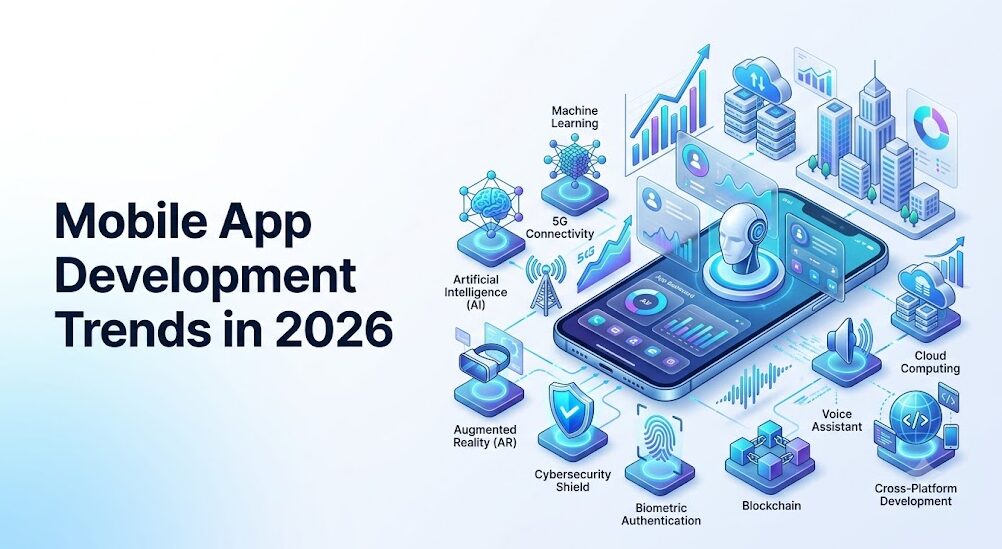
Technology never stands still, and mobile applications continue to evolve with changing customer expectations.
Several trends are expected to shape mobile app development throughout 2026.
Businesses are increasingly using Artificial Intelligence (AI) to personalize user experiences and automate customer support.
Machine Learning is helping apps deliver smarter recommendations based on customer behavior.
Voice search and voice assistants continue to grow, making hands-free interaction more common.
Augmented Reality (AR) is becoming increasingly popular in industries such as retail, healthcare, education, and real estate.
Faster 5G networks allow developers to build richer mobile experiences with lower latency.
At the same time, cybersecurity remains a top priority, with businesses investing in stronger authentication methods and advanced data protection.
Companies that embrace these technologies today are better prepared for tomorrow’s digital marketplace.
Why Choose Delogo Studio for Mobile Application Development?
Choosing the right development partner can make the difference between an app that simply works and one that delivers measurable business results.
At Delogo Studio, we focus on building custom mobile applications that solve real business challenges.
Our team works closely with clients to understand their goals before designing and developing solutions that are practical, scalable, and easy to maintain.
We provide:
- Custom Android app development
- iOS application development
- Cross-platform mobile app solutions
- UI/UX design
- Quality assurance and testing
- App Store deployment
- Ongoing maintenance and technical support
Whether you’re launching your first app or upgrading an existing platform, we build solutions designed to grow with your business.