When you are thinking about developing a Mobile Application for your company in 2026, one of your first questions will be: What will it cost me?
And the truthful answer is – it depends. A basic business application will most certainly be priced differently from an online store, booking application, social network, or even enterprise application. Current 2026 pricing estimates put the cost of professional mobile app development anywhere from tens of thousands of dollars for simpler apps to hundreds of thousands for more advanced, feature-rich platforms.
For companies in Princeton, TX, learning what affects the prices of mobile application development might be useful for budgeting purposes.
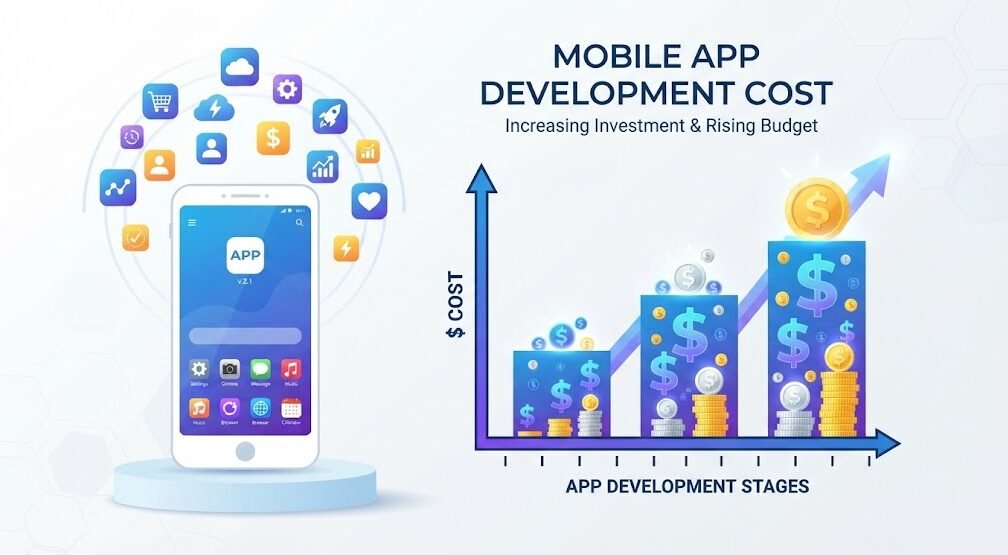
Average Mobile App Development Cost in 2026
As a general planning guide, a Mobile App may fall into these broad ranges:
| App Complexity | Approximate 2026 Cost |
| Simple Mobile App | $15,000–$40,000+ |
| Medium-Complexity App | $40,000–$100,000+ |
| Complex Mobile App | $100,000–$250,000+ |
| Enterprise-Level App | $250,000+ |
These are ranges for planning purposes; the final price will depend on the list of functions, platforms, design requirements, integrations, developers, testing, and support. The industry offers widely different estimates due to a great variety of projects.
This is why a professional development company should consider your specific needs first.
What Determines the Cost of a Mobile App?
Several factors can significantly affect your Mobile App development budget.
1. App Features and Functionality
The features you want are among the biggest cost drivers.
A basic company app with a few informational screens is considerably simpler than an application that includes user accounts, online payments, real-time messaging, GPS, video, artificial intelligence, or complex dashboards.
Common features include:
- User registration and login
- User profiles
- Push notifications
- Search and filters
- Online payments
- Booking systems
- GPS and location services
- In-app messaging
- Reviews and ratings
- Social media integration
- Analytics
- Admin dashboards
- AI-powered functionality
The more complex the functionality, the more development, testing, and project management your app will require.
2. iOS, Android, or Both?
Another major consideration is which platforms you want to support.
You may choose to develop for:
- iOS
- Android
- Both iOS and Android
- Multiple platforms using cross-platform technology
If your customers use both major platforms, developing an app that provides a reliable experience across iOS and Android may be the best long-term strategy.
De’Logo Studio offers custom mobile applications for major platforms, including iOS and Android, as well as cross-platform development technologies.
The right choice depends on your audience, budget, business objectives, and desired functionality.
3. UI/UX Design
A successful Mobile App needs more than functional code. It also needs an intuitive and attractive user experience.
UI/UX design can include:
- User flow planning
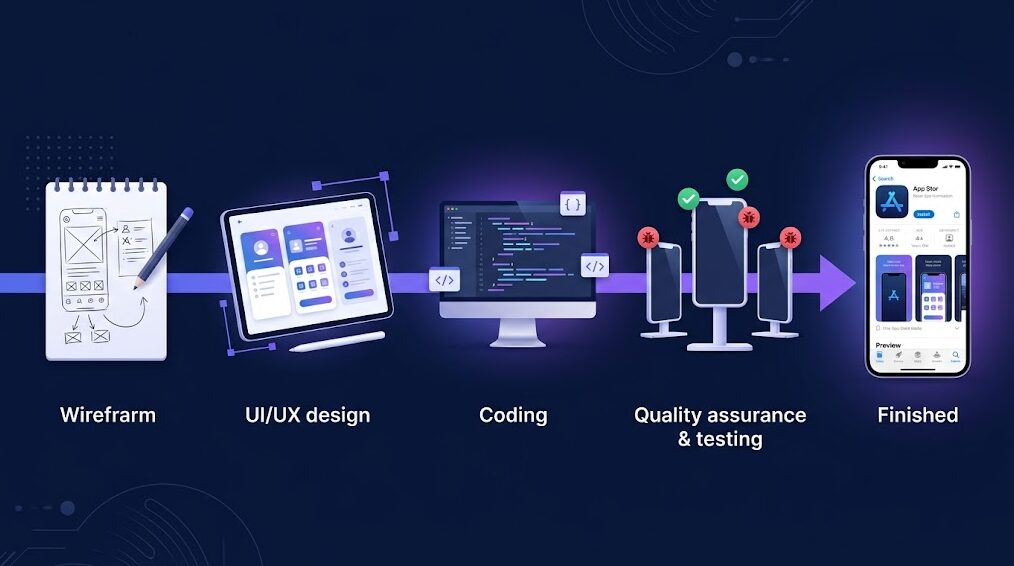
- Wireframes
- Custom screen designs
- Navigation
- Buttons and interactive elements
- Typography
- Colors
- Icons
- Prototypes
- Responsive layouts
Investing in professional UI/UX design can help make your application easier and more enjoyable to use.
For example, De’Logo Studio’s mobile app services include custom app screen designs, app icons, color options, and other visual components depending on the selected package.
4. Backend Development
Many Mobile Apps require a backend system that manages information and business logic.
The backend may handle:
- Customer accounts
- Orders
- Payments
- Product information
- Messages
- Bookings
- Notifications
- Database management
- Analytics
- Administrative controls
A simple app with limited data may need a relatively straightforward backend, while an application with thousands of users and multiple integrations can require significantly more infrastructure and development.
5. Third-Party Integrations
Your app may need to connect with other services.
Examples include:
- Payment gateways
- Google Maps
- CRM systems
- Email platforms
- Social media
- Accounting software
- Shipping services
- Analytics platforms
- Cloud services
Each integration requires development and testing. The number and complexity of integrations can therefore have a direct impact on your Mobile App development cost.
6. Custom vs. Cross-Platform Development
Another issue businesses have to address is how they would like the app to be developed.
A native application requires development for the particular platform, for example, iOS or Android. Cross-platform development might enable a business to develop an application for different platforms based on one common technology.
Cross-platform development could assist in controlling costs and development period for appropriate projects; however, it does not mean that this type of development should be applied to any application.
It all depends on your application needs and goals.
7. Testing and Quality Assurance
Testing should be part of your Mobile App budget from the beginning.
Professional testing may cover:
- Functionality
- Usability
- Device compatibility
- Different screen sizes
- Performance
- Security
- Navigation
- Payments
- Notifications
- App crashes and bugs
Skipping testing to reduce the initial budget can create more expensive problems after launch.
A reliable Mobile App should be tested before it reaches customers.
8. App Store Launch
Getting an app developed is only part of the process. You also need to prepare it for distribution.
This can include:
- App Store preparation
- Google Play preparation
- App descriptions
- Screenshots
- App icons
- Privacy information
- Store compliance
- Final testing
- Submission
Your development team can help ensure that the technical and visual components are ready for launch.
9. Maintenance and Updates
Your Mobile App will probably need ongoing attention after launch.
Operating systems change. Devices change. Security requirements evolve. Customers request improvements. Bugs can appear. Your business may also want new features.
Ongoing costs can include:
- Bug fixes
- Security updates
- Performance improvements
- OS compatibility updates
- New features
- Server costs
- Technical support
- App store updates
When calculating your budget, think beyond the initial development cost.
How to Reduce Mobile App Development Costs

Building an app does not necessarily mean launching every possible feature on day one.
One of the most effective strategies is to start with a Minimum Viable Product (MVP).
An MVP focuses on the core functionality needed to test your idea with real users. After collecting feedback, you can prioritize additional features based on actual demand.
Other ways to manage your budget include:
- Define your requirements before development
- Prioritize essential features
- Avoid unnecessary integrations
- Choose platforms based on your audience
- Use reusable technology where appropriate
- Plan the UI/UX before coding
- Test throughout development
- Avoid constantly changing the project scope
A clear scope helps your development team provide a more predictable estimate.
Is a Mobile App Worth the Investment for a Small Business?
For many businesses, a Mobile App can provide valuable opportunities to improve customer engagement, streamline operations, offer convenient services, and create new revenue channels.
For example, a Princeton, TX business might use an app for:
- Appointment scheduling
- Food or product ordering
- Customer loyalty programs
- Service requests
- E-commerce
- Customer communication
- Employee management
- Memberships
- Local delivery
However, an app should solve a real business or customer problem. Building an app simply because competitors have one may not produce a strong return on investment.
The best Mobile App projects begin with a clear purpose.
Why Choose a Professional Mobile App Development Company?
A professional development team can help you move from an initial concept to a functional application through planning, design, development, testing, and launch.
De’Logo Studio provides custom mobile app development services and has worked on hundreds of mobile applications. Its services include iOS and Android development, game development, VR applications, UI/UX, custom interfaces, and cross-platform technologies.
The company also highlights dedicated project management, 24/7 support, ownership rights, and no monthly or hidden fees as part of its mobile app service offering.
For businesses in Princeton, TX, working with a development partner that understands your requirements can make the process easier to manage from the initial concept through launch and future improvements.
How to Get an Accurate Mobile App Development Cost
The best way to determine your actual budget is to prepare a clear project scope before requesting quotes.
Include information such as:
- Your business objective
- Target audience
- Desired platforms
- Number of major screens
- Required features
- Payment requirements
- Third-party integrations
- Backend requirements
- Design expectations
- Launch goals
- Ongoing support needs
A development company can then evaluate the project and provide a more meaningful estimate.
Avoid choosing a development company based solely on the lowest quote. A surprisingly cheap estimate may leave out important components such as testing, backend development, support, or future maintenance.
Final Thoughts
But how expensive will it be to create a Mobile App in 2026?
It depends – there is no one-size-fits-all answer. The development of a simple application would not need much money; however, a more complex application with complex functionality and infrastructure might cost hundreds of thousands of dollars.
First of all, you need to realize your needs.
Think about your goals, your needs in terms of functions, the platforms that your customers use, and so on. Then work with an experienced Mobile App development company to turn those requirements into an accurate estimate.
If you are a business owner in Princeton, TX, planning a Mobile App, De’Logo Studio can help you explore your requirements and develop a custom application designed around your business goals.